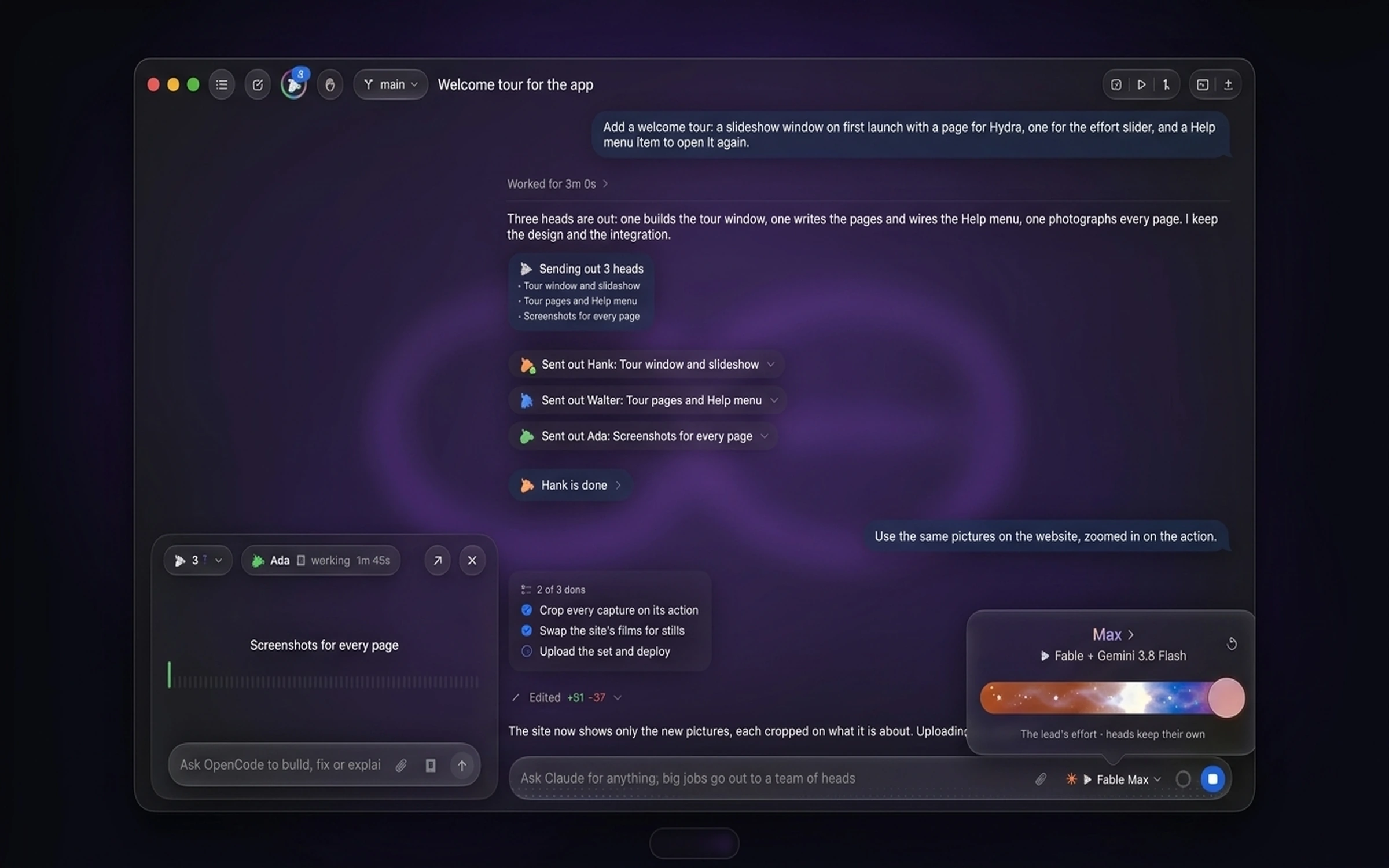
When we set out to build Ensembyte, the easiest choice was Electron. Almost every modern desktop tool — VS Code, Slack, Notion, Cursor, Figma — is built using web views inside a bundled Chromium runtime. It promises cross-platform convenience at the push of a button.
The problem is that Chromium was engineered to browse arbitrary untrusted websites, not to act as an ultra-lean desktop engine for code generation. When you open a standard Electron app, you pay a steep hardware tax: an entire V8 JavaScript runtime, a multi-process browser sandbox, and gigabytes of memory consumption.
// Benchmark: Fresh Window Idle Resource Consumption
// ----------------------------------------------------
// Electron (V8 + Blink + Node.js IPC): ~320 MB baseline RAM
// Ensembyte (Swift + AppKit Metal compositor): ~42 MB baseline RAM
// Launch Time: 180ms vs 1,450ms (8.1x faster native startup)
For a developer tool managing long-running git operations, terminal buffers, and streaming AI responses, every megabyte of overhead counts. On an Apple Silicon MacBook, 40MB baseline RAM means Ensembyte stays whisper-quiet without triggering fans or draining battery.
Building natively with SwiftUI gave us access to Apple's Liquid Glass rendering engine for free. Instead of faking blur effects with heavy CSS backdrop-filter hacks that drop frames during window resizing, macOS handles material translucency directly on the GPU using Metal shaders.
Our entire macOS Swift application has exactly one third-party library dependency: SwiftTerm, which provides the high-performance VT100 terminal emulation. Everything else — the UI components, the Git engine, the AI provider streaming parsers, and the checkpoint system — is built from scratch without bloated node_modules.
Engineering Ensembyte — a local-first, hyper-responsive multi-agent coding workstation crafted in pure Swift and Rust.
How we turned a single coding session into an autonomous swarm of parallel agents working in git worktree isolation, then landing their changes as one conflict-free merge.
Every turn is a shadow git checkpoint with automatic rollback. Every thread is an isolated worktree. Here is the low-level engine behind our local concurrency.
From Catppuccin Mocha to Tokyo Night and Dracula: designing optical contrast, tinted macOS shaders, and personal developer aesthetics.
